The Woodland Trust is a British organization aiming to save and restore forest lands of the UK. Only 2% of Britain’s ancient woodlands remain. Their latest project, under Queen Elizabeth’s guidance, is to plant 6 million trees as a lasting tribute in honor of the Queen’s Jubilee. The Jubilee Woods will transform the landscape of the UK in a generation.

It’s truly remarkable and remarkably simple. This patchwork of trees, like our patchwork of gardens, weaves together to create a lifeline of habitat and verdant beauty. What an easy way to make a difference.

Plant a tree. Grow a garden.

Shoot or pass the pistil.

The opportunity for “deckening*” is at hand, right out my door. However I’ve never loved growing plants in pots, at least not as a sole point of interest. In fact, when I get to the section on the latest container garden arrangements in nearly any and all gardening publication I hastily skip to the next article. Those people who put them together, the designers, always seem a bit stuffy and the pairings far too contrived for my liking. Now I see I’ve been short sighted and just a tad bit snobby.


I’ve decided it’s time to embrace my inner, container gardener.  Starting with a few native, drought tolerant or otherwise edible selections: Rosemary, party favor olives (a wedding guest gift), my poor soaproot - which is hanging on by a thread, blue fescue and some very fine Cleveland Sage (Salvia clevelandii) to name a few. Being one of those designers, I figure it’s about time.

My latest project is a raised veggie bed made from a galvanized steel watering trough. It’s a pre-fab, portable, hip meets urban farm solution with virtually zero risk of rotting. Perfect for deckening.

First, I measured then purchased a trough to fit the allotted space. Drilled drain holes along the bottom and placed the trough on 1/2 inch wooden slats to prevent it from sitting directly on the deck. This also creates a drop shadow, adding an element of visual interest. Finally, I filled the bed with a locally made organic planting mixture (mostly compost) and planted a no-fuss combination of scarlet runner beans, strawberries, sunflowers, calendula and nasturtium.

The task of hand watering, like weeding, is a seasoned love. However, potted plants suffer more readily from missed or inconsistent watering. Fruits and vegetables in particular often become stressed and therefore prone to disease, infestation, irregular fruting and bolting. So, I decided to install a drip irrigation system sourced from a deck-level spicket. It’s equipped with a timer, filter and backflow device.

It may not work out as I intended but it’s not for the lack of trying.  And, right now, it’s pretty darn satisfying.

*Deckening: the act of gardening on a deck environment.  Typically in pots or other containers.  AKA, a container garden.

Politics aside, you have to admit this is cool.  And, better still, using seeds saved from Thomas Jefferson’s garden literally brings history to life.

Sometimes I like to test the common school of thought, such as the first time I grew scarlet runner beans. Conventional wisdom says, “Start beans in a wet paper towel….” So, of course, I popped a few straight in soil. What could I lose? But, to be certain of minimal success, I started the rest as recommended.

Only one or two of the beans sown directly in soil sprouted. The others came up moldy and rotting, like a forgotten bit of food found deep in the recesses of my refrigerator. However, all of the beans tucked neatly in moist paper were emerging, perky and ready to go.

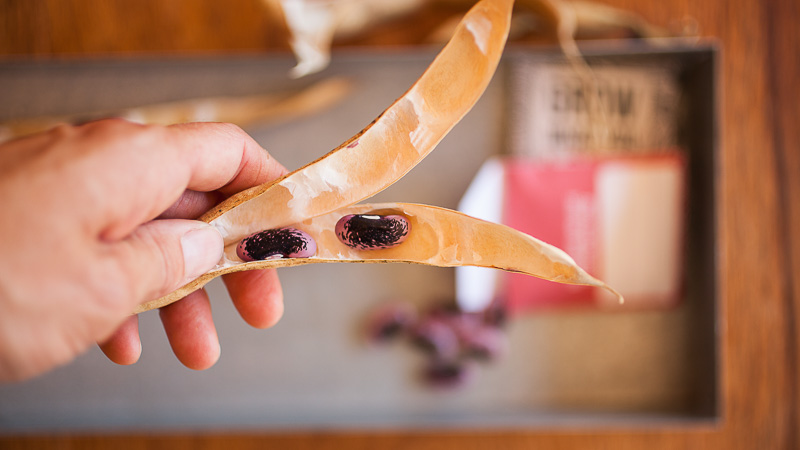
These beans are the descendants of my first, lucky crop. They were left to start a couple days too long but have since found their way into the soil.

Lucky for them and lucky for me.


The poppies have bloomed.  I have to say that they are suspiciously beautiful, in a way reminiscent of an Alice in Wonderland character.  Strangely fascinating.  The honeybees are particularly amazed. I’m already anticipating their day-after-Christmas blues when the last petal falls and there is no more pollen to gather.

A quick bit of research led me to a honeybee foraging study.  ”Results showed significantly higher foraging response of honeybees (Apis mellifera) in genetically divergent narcotic plant opium poppy (Papaver somniferum)…”  Interesting.  I planted these flowers for their unique form, cool casules and tasty seeds.  I hadn’t planned to intoxicate the local bee population.

Volume 97, Issue 13, September 2006, Pages 1578–1581


These compact lettuces are a bold mixture of nutty, sun-kissed flavors finishing with unexpected hints of freshly picked celery and crushed pepper.  Maybe not fine wine but definitely varieties worth growing. Whether faced with the task of filling a vegetable bed or a potted garden, it doesn’t matter, there is a whole sleuth of seeds to choose from.

Here are my basic ground rules for planting a veggie bed:

  • Always grow what you love and what you’ll eat.
  • Make it beautiful.  Include color, crop rotations and companion plants that work together creating a simple but pleasing design.
  • Always try a couple new varieties.  It could be a can of worms (which isn’t so bad) or simply make you realize the best things really do come in small packages.


Methyl bromide has been the fumigant of choice for conventional, US strawberry growers.  Plastic row covers are installed and methyl bromide gas injected, sterilizing the soil, killing fungi, weed seeds, and every other living thing.  Studies show that fumigated fields yield 5 times more strawberries than non-fumigated fields.  It’s a lucrative business, for farmers and pesticide companies.   Especially when so many of us have become accustomed to juicy, ruby red strawberries much of the year.

However, methyl bromide has been identified as an ozone damaging chemical and was added in 2005 to the list of banned substances under the Montreal Protocol, an international treaty established to protect the earth’s ozone.  A critical use provision was then passed for its continued application while farmers look for a viable alternative.

A sister chemical, methyl iodide, was considered and it’s use passed by the EPA.  This came as a shock to the scientific community.  Methyl iodide is a volatile chemical known to cause cancer, nervous system damage and miscarriages and it’s potential to travel by air to neighboring communities, contaminate ground water and poison farm workers a critical concern.  Only last week, after years long battle, was the the pesticide taken off the market.

Soil-less growing mediums such as peat and coconut fiber are also being examined.  Why use dirt only to sterilize it?  However, cost and natural resources could deem this prohibitive.  So what will they do?

The strawberry agribusiness in California alone is a billion dollar endeavor.  The math seems simple to many.  The more strawberries produced the more money made, no matter the cost.  But have we lost our minds?  Polluting the soil, polluting the air and polluting our bodies for strawberries?

I love strawberries as much as the next person.  Particularly the smaller varieties, brilliant red straight through with a complex sweetness that is a mix of earth and spring.  But fruit such as this only comes from well tended, healthy soil.  Soil that is living.  Organic strawberry growers at Swanton Berry Farm describe their successful “slow farming” business as one based on soil health.  By using dry fallow rotations, crop rotations, cover crops, weeding and a bit of care there are no pesticides needed.  The fruit sometimes costs a bit more than its conventionally raised counterpart but the flavor and nutritional value cannot be beat.  In fact, consuming conventionally grown strawberries could adversely impact your health.  They are among the dirty dozen, one of twelve fruits and vegetables with the greatest amount of residual pesticides.

Solutions:

  • Buy organic strawberries.
  • Grow your own organic strawberries.
  • Rotate strawberry crops with broccoli or other brassicas.


The oddest thing happened. I was on a perfectly lovely trail run near the headlands when bits of partially eaten plants and plant parts began littering the path in front of me. Roots, fibers and leaves that looked strangely like those of a bulb appeared frantically strewn about, the remains of what appeared to be a frenzied feast. Upon rounding the next bend this bulb lay waiting, the lone survivor.

I quickly set it to the trail side (hoping to pick it up on my return) and continued on my way. It was early morning and the guilty critter was probably not far from the scene, having enjoyed a meal of soaproot with extra soaproot, Chlorogalum pomeridianum. Except this one. Funny. Soaproot is edbile, leaves and all. Native Americans would roast them slowly overnight, eating them the next day, or simply eat the young leaves. (The fibers were used to make brushes.) But besides using the bulb as a soap or glue they would also add the crushed bulb to a dammed stream to stupefy fish for an easy harvest.  The toxic chemicals these plants possess are obviously not toxic to all animals, but maybe intoxicating?

This particular plant is now living in the semi-safety of a pot on my deck, waiting for it’s ultimate home in the garden. Native to California, it’s an incredibly drought tolerant and hardy plant with terrific landscape potential. It’s curvy, strap shaped leaves pop up from the protection of horse hair like fibers to eventually produce a delicately stunning flower.

Grow it:

  • Tolerates dry, poor soil.
  • Grow in perennial, rock or meadow gardens.
  • Fragrant flowers bloom in late spring.
  • Moth pollinated.  Fragrance increases in the evening.
  • Useful and beautiful.  Admire, eat or clean with it!
  • Beware of what might come to your garden to eat it.
  • Find at a CA native plant nursery or mail order from Annie’s Annuals.
  • Illegal or simply bad karma to harvest from protected spaces.


I started my New Year’s resolution early, direct seeding these poppies, Papaver somniferum, in October.  I’m embarrassed to admit it, but they’ve been on “my must” plant list for over 20 years.  Pathetic, maybe.  Horribly distracted, probably.

I was botanizing common garden weeds with taxonomy friends when they first caught my attention.  They were obviously poppies but I didn’t know my ornamentals well and I’m sure I stood there looking dazzled and uncertain.  “Don’t you know what these are?” a friend asked.   And, without waiting for a response she stated simply, “Opium poppies.”

I had no idea any old person could grow opium poppies, let alone let them run wild in a community  garden.  They’re beautiful, vibrant and legal?  Cool.

Shortly following this I was waiting in line at the local bagelry.  A newspaper article was neatly taped to one of the glass cases.  It read, “Parolee fails drug test after eating poppy seed bagel, sent back to jail.”  (Or something close to that.)  I was getting a fast education.

Technically, poppy seeds are considered “free” of  opiate substances but apparently not free enough.  They are, however, quite nutritious for being miniscule.  Rich in fiber, mono-unsaturated fatty acids (the good guys) and essential vitamins and minerals.  Add to that their yummy, aromatic crunch as an ingredient in breads and other baked goods, (don’t forget, “beautiful, vibrant and legal”.)  why wouldn’t you grow them?  It’s easy.

Plan to seed between September and April.  I generally prefer seeding in fall, letting winter weather water for me.  Poppies can also exist in a dormant stage under winter snow.  Grow in rich soil with good drainage in full sun.  Gently broadcast seeds and cover barely with soil.   Water moderately until germination.  Making sure soil is just moist, not overly wet or dry.  Water and fertilize as needed once germinated.  Space about 12 inches apart and allow for at least 12 inches of root space.  Thin or move plants to provide proper spacing.  Poppies have fragile root systems so take care when moving or transplanting.

“A poppy is a poppy by any other name…”

Funny.  It’s rare to find an artichoke gone to seed.  Typically gobbled up when cheek-pinching perfect, young and in bud.  Passing one up is like a child passing up a perfectly creamy, chocolate dipped ice-cream cone.  Impossible.

But artichokes left to flower are stunning and better yet, post flower, there are seeds!  And the whacky, wooly pappus of artichoke seeds are nearly as irresistible as the artichokes themselves.  Words like artful or kinky aren’t enough to capture their sprite-like form.

I collected these seeds and others in keeping with my new year’s resolutions:

#1: Grow more flowers.  #2: Collect more seeds.  #3: Grow more plants from seed.  #4:Grow more flowers.

These seeds spell opportunity and a happy future.  It will be my first time growing chokes from seed.  I’ll be using the guidelines as outlined in Grow it Organically.

If it were up to me, artichokes would be key to every gardens patchwork.  Any garden.  From roadside median, perennial border, edible landscape or kitchen garden.  They are “keep fingers clear” delicious (if you didn’t know) and a fantastic focal point, especially when grown in mass (plant at least three).  And with so many varieties to choose from, how could you go wrong?